Stress and breathing are linked
Stress and breathing are intimately linked

In order to understand how breathing can help cope with stress, we need to go back to the effects of stress on it. In such situations, the breath usually comes shorter, faster and is located at the level of the ribcage: this is hyperventilation, a normal reaction in case of alert. But when it continues, it is accompanied by unpleasant effects that reinforce the discomfort: we are caught in small vertigo, sweat andpulses.

"Slow, deep, abdominal breathing, which is the opposite of hyperventilation, is the first thing I recommend to my patients," says psychiatrist Dominique Servant, head of the Stress and Anxiety Unit at Lille University Hospital, author of a practical book on this technique. Watching this long breath for a few minutes will balance the autonomic nervous system, which regulates all our major functions like the heart."Being able to activate this breathing control technique simply, anywhere and discreetly, is one of its main assets. However, it requires a short learning phase, daily, quiet, to ensure its efficiency.
A deeper relaxation
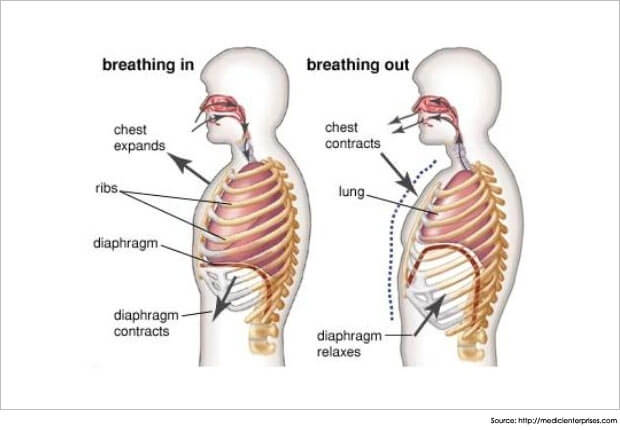
Breathing is not just an "anti-stress set". It also allows access to a deeper relaxation. "To this end, we will arrange, for about ten minutes, a quiet moment. The goal is to associate the deep, slow and abdominal breathing with a centering techniques (on different parts of the body, the face or the hands for example) or of mental visualization (by summoning a color, a place that one cherishes, a pleasant memory) to induce, as in the exercises of self-hypnosis, a feeling of well-being and relaxation ", explains Dominique Servant.

Finally, another breathing technique can be practiced as part of mindfulness meditation. Inspired by Oriental wisdom, it consists of focusing on the present moment, its’ sensations and perceptions. Popularized for a decade in France, the psychiatrist Christophe André is one of his most promoters, mindfulness induces a detached and serene mental state to protect from the effects of stress. "The breathing here is rather natural, quiet and not necessarily slow," says Dr. Servant. We practice it first while sitting, remaining vigilant and paying attention to what is happening in us, without judgment.Then we do it while moving. "
Respiratory control is thus an anti-stress tool, natural, flexible according to the situations and accessible to all. Everyone can find the shape that suits him.

Sleep deprived? Struggling to sleep at night? Why don't you try these easy and relaxing tips to sleep like a baby. Sleep is an integral part of our daily lives. It gives rest to our over time busy organs and rejuvenates them. Most of the healing to our bruised bodies and troubled minds happen during sleep. Insomnia, lack of sleep is considered as a disorder. And is treated via medication. Sleep acts like a magic potion to brain, eyes, mind, heart and limbs. A good night's sleep energises us for the next day's gruelling tasks.

Breathing Technique
Mentioned in ancient yoga, researched and popularised by Dr.Andrew Weil, this technique calms the mind and body by taking in more oxygen thereby de-stressing the brain and central nervous system. It's a proven tip to sleeping tight.